


FEATURED ARTICLES
Rethinking Creative Listening: Sparking Imagination During First Grade Listening
Rethinking Creative Listening: Sparking Imagination During First Grade Listening
Jennifer Cobb


Jennifer Cobb,
Archbold Area Schools
Creative listening activities are often used to encourage imagination and engagement in elementary music classrooms, yet young students do not always respond creatively without guidance. This article explores how small adjustments to listening prompts can support divergent thinking in first grade. After observing frustration among students during instrument identification activities, the author restructured listening lessons to focus on an “instrument of the month” combined with open-ended imaginative prompts prior to listening. Drawing on developmental research and classroom observations, the article illustrates how providing a simple creative context encourages students to move beyond correct or incorrect answers and instead explore musical meaning, timbre, and imagination.
Continuing with the theme of creativity and imagination during listening activities I wrote about in my previous article, Rethinking Creative Listening: Helping Kindergarten Students Move Beyond Literal Responses, I also needed to rework my listening activities and add in creative, divergent elements to listening in first grade. My listening curriculum in first grade focuses on instruments and their unique timbres with the hope that this experience would set the groundwork for listening experiences in later years.
My original plan was simple: I would introduce a new instrument each week and play an instrumental four corners game where students move to the corner representing the instrument they think they hear. The game “What Instrument Do You Hear?” was fun, energetic, and most students loved it.
However, I noticed that some students became frustrated when they were repeatedly incorrect. Instead of building curiosity about sound, the activity sometimes created embarrassment or discouragement. Rather than focusing on exploration and listening, students were focused on being right.
What I was observing is consistent with what we know about first-grade development. First graders often display a complex mix of growing independence alongside an increased need for attention and approval. They are eager to succeed and want to “be first,” yet they may also become discouraged when they feel unsuccessful (Understood, n.d.). Developmental research notes that first graders may form and break friendships easily, become more aware of others’ feelings, and are often highly motivated to please adults and peers (Understood, n.d.).

Advertisement
Because of this, I began reconsidering how listening activities could maintain a focus on instrumental timbre while also supporting creativity and confidence.
I decided to keep the focus on instruments but shift the structure slightly by introducing an instrument of the month rather than a different instrument each week. The first lesson of each month begins with a short, age-appropriate introduction video about the instrument. I found several engaging options through sources such as PBS’s Omaha Symphony Virtual Instruments, Kids Imagination Nation, and Music in the Round: Meet the Musicians (0–5 series). During the remaining lessons of the month, students listen to musical examples featuring solos or prominent parts for that instrument.
While this structure provided students with deeper exposure to each instrument and its unique timbre, I still felt something was missing: the opportunity for creative, divergent listening.
Research suggests that children ages six and seven are eager, imaginative, and curious learners who enjoy challenge and creative problem solving. At this stage they retain a strong sense of fantasy in their thinking and play, which provides an ideal foundation for creative engagement (Scholastic, n.d.).
At the same time, however, children at this age still think quite concretely. According to Piaget’s theory of cognitive development, children in the preoperational stage become increasingly skilled in pretend play while continuing to interpret the world through concrete experiences (Cherry, 2025).
Knowing that students often need some form of context to spark their creativity, I began introducing a divergent prompt prior to listening activities.
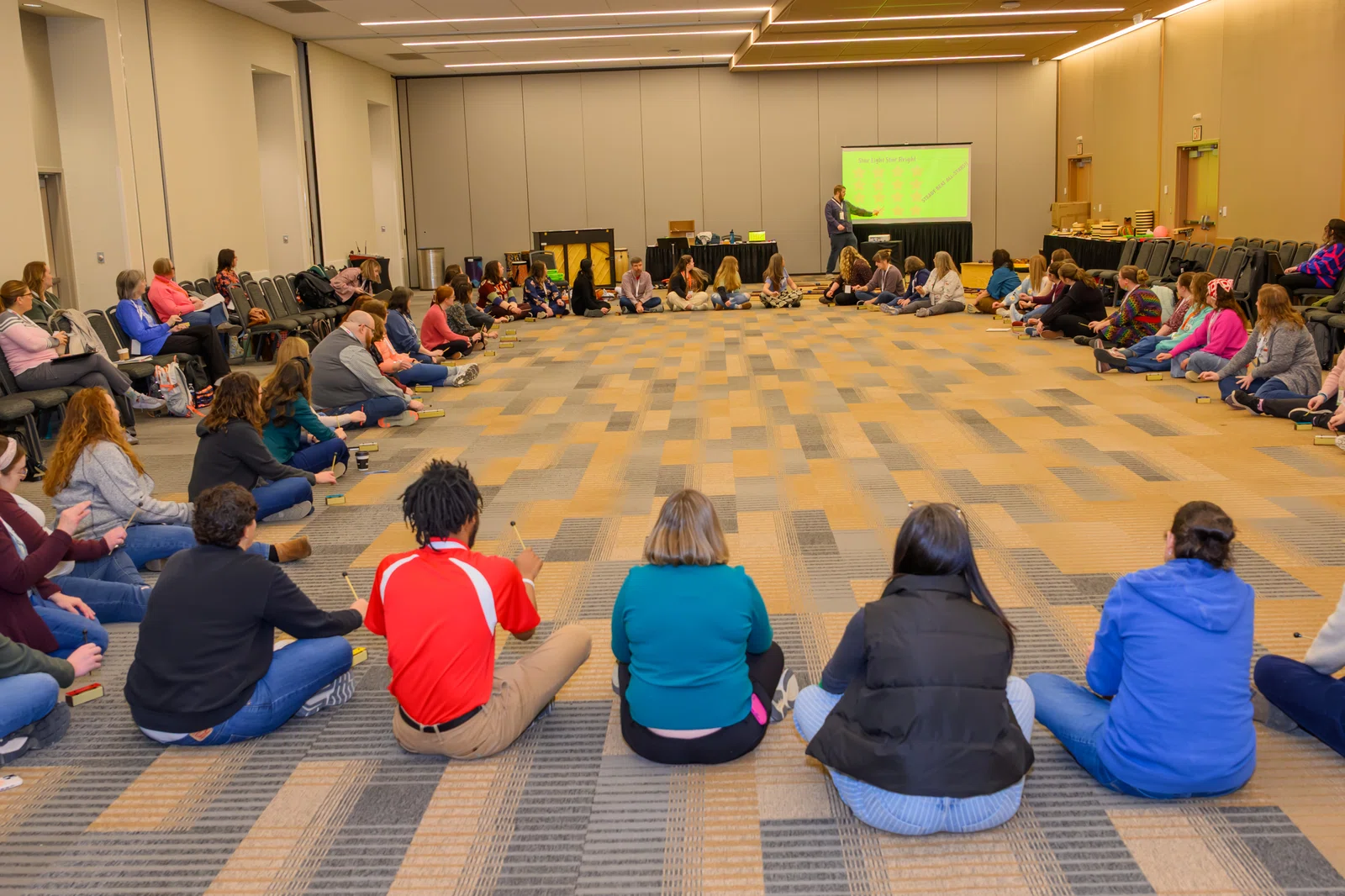
Instead of asking students to immediately identify the instrument, I began asking questions such as:
- Imagine you are walking in the woods. What are you doing?
- What kind of character might live inside this music?
- What kind of place could this music happen in?
- What animal moves like this music?
Students who had previously felt frustrated became eager to share their ideas. When listening to Yo-Yo Ma perform Bach’s Prélude from Suite No. 2, several first graders shared that they imagined themselves walking quietly through the woods alone. When I asked why they were alone, one student replied, “Because there was only one cello playing.”
When I asked whether they felt lost in the woods, students responded that they did not. The music sounded calm and peaceful rather than scary.
Do my students know what a cello sounds like after this activity? Yes.
But more importantly, they are beginning to listen for meaning, making connections between musical sound, mood, and imagination.
By pairing instrumental listening with a simple divergent question, students are able to explore the unique timbre of each instrument while also engaging creatively with the music. Instead of worrying about being correct, they become curious listeners who are eager to share what they hear and imagine. In this way, listening becomes less about identifying the “right” answer and more about exploring musical meaning. This approach builds naturally on the imaginative listening experiences introduced in kindergarten and lays the groundwork for increasingly thoughtful and reflective listening activities in the years that follow.
References
Cherry, K. (2025). Piaget’s stages of cognitive development. Verywell Mind.
https://www.verywellmind.com/piagets-stages-of-cognitive-development-2795457
Scholastic. (n.d.). How creativity blooms in 6–7 year olds.
https://www.scholastic.com/parents/kids-activities-and-printables/activities-for-kids/arts-and-craft-ideas/how-creativity-blooms-6-7-year-olds.html
Understood. (n.d.). Developmental milestones for typical first graders.
https://www.understood.org/en/articles/developmental-milestones-for-typical-first-graders
Jennifer Cobb is the general music teacher at Archbold Area Schools located in NW Ohio. Her research is centered around active listening, reflection through listening logs, and developing musical identity through the use of divergent questions. Mrs. Cobb is passionate about scaffolding music experiences for young musicians that set them up for musical success. She holds a Master of Music degree from Bowling Green State University.
©2026 Ohio Music Education Association