


FEATURED ARTICLES
Leveling Up: Takeaways from the 2026 Modern Band Summit
Leveling Up: Takeaways from the 2026 Modern Band Summit
Michelle Leasor, Ed.D.


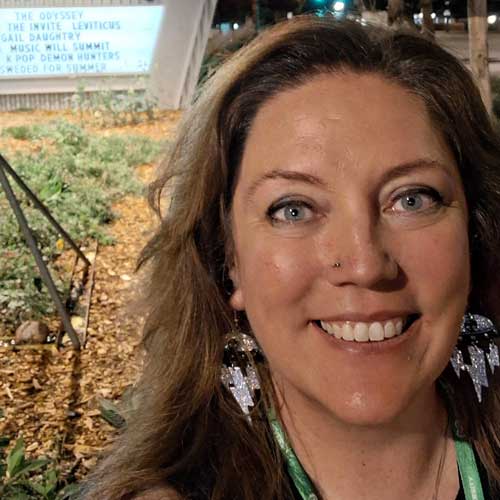
Michelle Leasor, Ed.D.,
Pickerington Local Schools
More than 400 music educators gathered at Colorado State University in Fort Collins, Colorado, July 22–24 for Music Will’s 2026 Modern Band Summit. With the theme “Level Up,” this year’s conference continued the Summit’s emphasis on student-centered, culturally responsive music education while offering teachers practical strategies they could take directly back to their classrooms. The conference provided an opportunity not only to learn about modern band, but also to experience it firsthand through workshops, ensemble playing, and collaboration with educators from across the country.
I attended the Summit again this year and was not disappointed, as there was such a variety of sessions to experience. The schedule included sessions on pedagogy, assessment, student leadership, budgeting, advocacy, technology, songwriting, accessibility, and program development in addition to instrument-specific sessions. Teachers could choose from sessions such as “Beyond the Bassics: Using Iconic Basslines to Teach Technique, Touch, and Tone” and “Hear It, Play It: Piano Strategies for Ear Training and Improvisation.” “What Should I Teach First? A Sequenced Jam Session” offered a particularly useful reminder for teachers new to modern band: improvisation and ensemble playing do not have to begin with an unstructured “jam” session.

Advertisement
Several sessions also addressed an issue familiar to many of us: how to implement other musical opportunities when resources and time are limited. “Modern Band on a Shoestring Budget” and “Outfitting Your Modern Band: Building Unity, Identity, and Fundraising Power” pointed toward a practical approach: start with what is available rather than waiting for a fully equipped music lab. A few guitars, keyboards, percussion instruments, or digital tools can become entry points for ensemble music-making. Teachers can rotate students through roles, use peer teaching, and gradually expand their instrument inventory as the program develops.
The Summit also reflected the growing intersection of modern band and technology. Sessions including “Computer-Based Music Composition,” “Composing with AI: Who’s in Charge?,” “Tech-Forward Music Making,” and “Creating Your Own Modern Band Play-Alongs Using Free Tools” demonstrated that contemporary music education increasingly extends beyond traditional instruments. The practical implication is not that every classroom needs expensive technology; rather, teachers can use accessible digital tools to lower barriers to composition, arranging, recording, and performance.
Perhaps most importantly, the 2026 Summit demonstrated that modern band is not simply a collection of popular-music activities. It represents a distinct, student-centered pedagogy that complements the approaches music teachers already use. Music Will describes its approach as one in which students learn through playing, creating, collaborating, producing, and songwriting, with teachers guiding students rather than simply directing them. Importantly, modern band is continuing to add to its research and higher education base. Music Will has partnered with researchers from institutions such as Teachers College at Columbia University and Florida State University to investigate student engagement, participation, creativity, and musical growth. Research has found positive associations between modern band participation and students’ reported musical, social, emotional, and academic development - both within and outside of the music classroom.

A highlight for many Summit attendees is participating in performances in the evenings throughout the conference. This year I had an opportunity to join a couple of bands, ranging from ska and punk to Irish rock and progressive pop, and our bands represented teachers from around the nation. The sense of community formed through music participation is indescribable, with teachers already planning ahead for next year’s band lineups.
Music Will makes most of its modern band curriculum materials and teacher resources freely available online, including lesson plans, instrument charts, classroom posters, piano Jam Cards, videos, workshop materials, and Modern Band Summit presentations. Teachers can explore these resources at www.musicwill.org without purchasing a curriculum or assembling an extensive collection of specialized materials. Music Will also offers free professional-development opportunities such as Modern Band 101 and 102, and many of these are offered virtually throughout the year. Additionally, all of the session presentations from the Modern Band Summit are available on the Music Will website.
The Summit is not just for teachers who already have a modern band program. Elementary general music teachers, middle and high school music educators, ensemble directors, music technology teachers, college music education faculty, administrators, and teachers who are simply looking for new ways to engage students can all find something applicable. In fact, the majority of attendees at the Modern Band Summit do not exclusively teach modern band - most are ensemble directors, general music teachers, and the like.

Registration for the 2026 Summit was completely free for all attendees, thanks to donor and sponsor support, and Music Will also offered a limited number of scholarships to help offset transportation, lodging, meals, and other expenses. Although future registration and scholarship opportunities will depend on available funding, teachers interested in attending the 2027 Summit should watch Music Will’s website for announcements. The 2027 Summit is scheduled for July 14–16, 2027, in Fort Collins, Colorado.
For music teachers, perhaps the most useful takeaway from the 2026 Modern Band Summit is that modern band does not have to be an “either/or” proposition. It does not require abandoning concert band, choir, orchestra, general music, or traditional Western approaches to musicianship. Instead, it offers another strategy for the music teacher’s pedagogical toolbox. Modern band pedagogy can provide students with opportunities to learn through music they recognize, create music of their own, collaborate with peers, and take greater ownership of their musical experiences. The goal is not simply to “add modern band” or replace what music teachers do. It is to expand the ways students can experience themselves as musicians and level up music education to meet students where they are and where they are going.
Michelle Leasor, Ed.D. is a general music specialist at Toll Gate Middle School in Pickerington Local Schools. She also serves as an adjunct instructor for undergraduate and graduate music technology courses and is the author of resource guides for general music.
©2026 Ohio Music Education Association